Roughly one in three adults in the United States will experience an anxiety disorder at some point in their life, according to the National Institute of Mental Health — and that figure doesn’t even count the far larger number of people who deal with ordinary, situational anxiety that never rises to a diagnosis but still makes daily life harder than it needs to be. If you’ve been looking for ways to manage anxiety naturally, before or alongside professional support, the good news is that several everyday habits have real evidence behind them. This guide walks through what’s actually worth trying, why it works, and when self-care alone isn’t enough.
Everyday Worry vs. an Anxiety Disorder
Some anxiety is a normal, useful part of being human — it’s what makes you double-check a stove burner or prepare for a big presentation. NIMH draws a clear line between that kind of occasional worry and an anxiety disorder: the difference is that clinical anxiety “does not go away, is felt in many situations, and can get worse over time,” often interfering with work, school, or relationships. You don’t need a diagnosis to benefit from the strategies below, but it’s worth keeping that distinction in mind as you read — persistent, worsening anxiety is a signal to loop in a professional, not just try harder on your own.
Why Willpower Alone Rarely Works
Telling an anxious brain to “just relax” tends to fail for a physiological reason: anxiety originates in the body’s threat-detection system, not in a conscious decision you can simply override. When that system activates, your heart rate climbs, muscles tense, and attention narrows toward the perceived threat — useful if you’re facing an actual emergency, exhausting when it fires off over an inbox or a crowded room. That’s exactly why the most effective natural strategies work with the nervous system directly, rather than trying to think your way out of a physical response.
Natural Ways to Manage Anxiety
None of these replace treatment for a diagnosed anxiety disorder, but each has meaningful research behind it as a way to manage anxiety naturally, whether you’re dealing with an occasional stretch of worry or supporting other care you’re already receiving.
- Move your body, especially with intensity you enjoy. According to Harvard Health, exercise raises the availability of anti-anxiety neurochemicals including serotonin, GABA, and endocannabinoids, while also engaging the brain’s executive-function regions that help rein in an overactive threat response. Encouragingly, the research suggests the type of movement matters less than doing it consistently — tai chi and high-intensity intervals have both shown benefit.
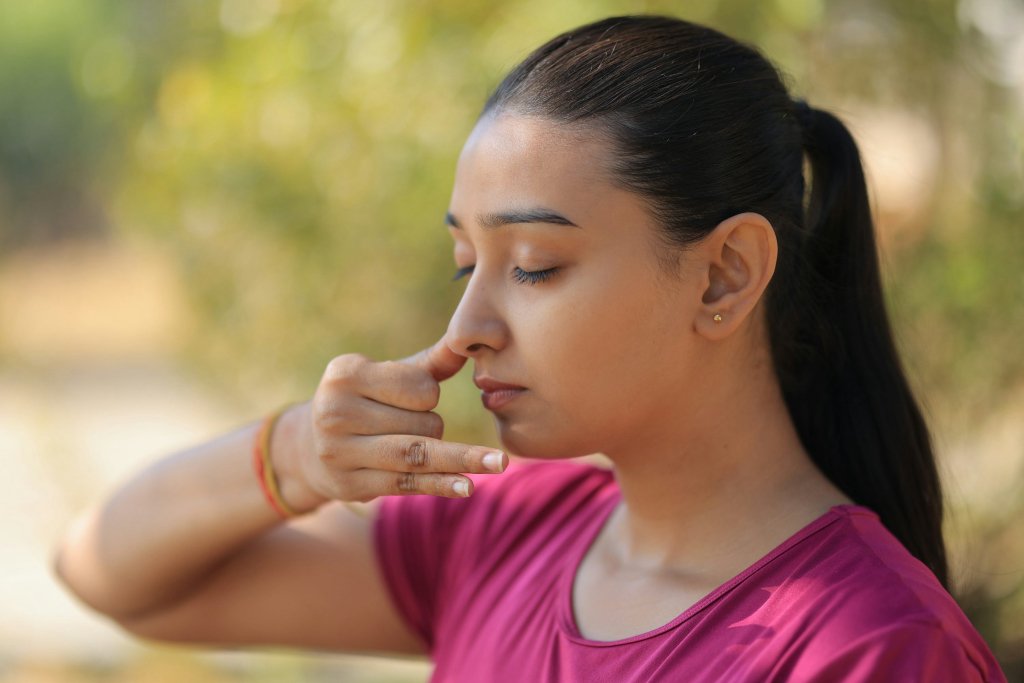
- Practice slow, extended-exhale breathing. Techniques that lengthen the exhale relative to the inhale — a slow four-count in, six-count out, for example — signal safety to the nervous system and can measurably lower physical anxiety symptoms within minutes. This is one of the few tools that works in the moment, not just as a long-term habit.
- Protect your sleep window. Sleep and anxiety feed each other in both directions: poor sleep heightens next-day anxiety, and anxiety makes it harder to fall asleep. A consistent bedtime does more here than almost any other single habit.
- Get anxious thoughts out of your head and onto paper. Writing down a specific worry — what it is, what’s actually within your control, and one next step — can quiet the mental looping that keeps anxious thoughts circling. Our guide to journaling for mental health covers several low-effort ways to start.
- Build a brief mindfulness practice. Regularly practicing present-moment attention, even for five minutes, trains you to notice anxious thoughts without immediately reacting to them. Our piece on mindfulness for stress walks through simple ways to begin, along with an honest look at where the research is strongest.
- Watch caffeine and alcohol, especially later in the day. Caffeine can mimic or intensify physical anxiety symptoms — racing heart, jitteriness — for people who are sensitive to it, and alcohol’s calming effect tends to rebound into worse anxiety once it wears off.
Notice Where Your Anxiety Tends to Concentrate
Generalized anxiety can show up anywhere, but it’s often worth noticing whether yours clusters around a particular source. Work is one of the most common — the boundary between “on” and “off” has blurred for a lot of people, and that spillover is worth naming rather than absorbing as background noise. If that sounds familiar, our article on managing workplace stress looks specifically at that pattern and practical ways to build a firmer line around it.
When Anxiety Needs More Than Self-Care
Natural strategies can meaningfully reduce day-to-day anxiety, but they aren’t a substitute for professional care when anxiety is severe, persistent, or interfering with your ability to function. Signs worth bringing to a healthcare provider include anxiety that doesn’t ease with rest or the strategies above, physical symptoms like a racing heart or chest tightness that concern you, avoiding places or situations out of fear, or anxious thoughts that feel impossible to redirect. A doctor or therapist can also help rule out other causes — thyroid issues and certain medications can produce anxiety-like symptoms — and options like cognitive behavioral therapy have strong evidence behind them for people who need more support than lifestyle changes alone provide.
This is educational content, not medical advice — consult a healthcare provider or mental health professional for guidance specific to your symptoms.
FAQs
How long does it take for natural anxiety strategies to work?
Breathing techniques can ease physical symptoms within minutes, while habits like exercise, sleep consistency, and mindfulness typically need a few weeks of regular practice before you notice a meaningful shift in your baseline anxiety level. Think of them as building a foundation rather than a quick fix.
Can diet affect anxiety?
Blood sugar swings from skipped meals or a lot of refined carbohydrates can produce physical sensations — shakiness, a racing heart — that feel a lot like anxiety, and chronic low intake of nutrients like magnesium and omega-3s has been loosely linked to higher anxiety symptoms in some research. Regular, balanced meals are a reasonable supporting habit, though diet alone isn’t a treatment for an anxiety disorder.
Is it normal for anxiety to show up as physical symptoms rather than worry?
Yes — anxiety frequently shows up physically first, as a tight chest, stomach upset, muscle tension, or fatigue, sometimes before a person consciously identifies that they’re anxious at all. This is one reason anxiety can be mistaken for a purely physical issue and is worth mentioning to a healthcare provider if it’s a pattern for you.
Does anxiety ever go away completely?
For many people, anxiety becomes more manageable rather than disappearing entirely, and that’s a realistic, healthy goal — some baseline capacity for worry is normal and even useful. The aim of these strategies is to keep anxiety from running the show, not to eliminate the feeling altogether.
Can children and teens use these same strategies?
Many of the same tools — movement, consistent sleep, breathing techniques, and naming worries out loud or in writing — apply well to children and teens, though anxiety in young people is also worth discussing with a pediatrician or school counselor, since it can show up differently than it does in adults and sometimes benefits from additional support.
Small Tools, Used Consistently
Nothing on this list makes anxiety disappear overnight, and that’s by design — the strategies that hold up best over time are the unglamorous, repeatable ones: moving your body, protecting sleep, breathing on purpose, and getting support when self-care alone isn’t enough. Layered together and given a few weeks, they tend to do more than any single anxiety hack ever could.